Wednesday, 14 January 2009

The Adventure Company: Journey Through Jordan

Our latest entry comes from Colin Stump who completed the Journey To Petra trip in June 2008. He travelled with his daughter Anna, and kindly shares his travel diary with us:

Photobucket

Day 1
In the early hours, we arrived in the bustling city of Amman, now with a population of some 3 million people including almost one million Iraqis who have left their own country and have helped to inject new wealth into Jordan. Our first day took us 45 km north to Jerash, quickly leaving the rush hour strewn motorways of Amman to cross rolling hills of olive groves, punctuated by small stands of pine and eucalyptus trees.

Jerash is a well preserved and sizeable Roman city, and now the site of the huge annual Jerash Festival of Culture & Arts, this year hosting Placido Domingo. Accessed through a vast monumental arch, built in commemoration of Hadrian, who visited the city in 129-130, we passed the Hippodrome to our left, this the site of ancient sporting festivals and chariot races, and now staging replica battles and chariot demonstrations again. We moved on through the South Gate, passing the lower terraces of the Temple of Zeus before admiring the impressive Oval Plaza, a large paved area enclosed by two curving colonnades. The nearby South Theatre is the largest of the city’s three theatres, built around 90 AD, with impressive acoustics, only marred by the rather sad appearance of a bagpipe and drum duo who ‘performed’ whilst we looked on.

A long hot walk took us down the city’s main street, the Cardo, which has amazing drainage systems for its day, and then we went up the hill to the imposing Temple of Artemis with views to the adjacent cathedral and North Theatre, whilst being serenaded by the midday call to prayer from at least five local muezzin from the settlements all around us.

Photobucket

Early afternoon we headed to the cooler hills to the west, en route to Aljoun, site of an impressive castle, constructed around 1184 by a close relative of Salah-al Din to limit expansion of the Crusader movement. Expansive views to the Jordan valley, although now very hazy.

Photobucket

A good day of archaeological exploration, aided by the fact that tourist numbers at this time of the year are low because of the heat. Their monuments are all the more attractive for the local white limestone that dominates all building in this region, with sympathetic restoration by the Jordanian authorities.

A very good dinner at Tannoureen in West Amman, rated the best place for Lebanese food in Jordan.

Day 2
Passing through Abdoun, the ‘Belgravia’ of Amman, we headed south on to the King’s Highway bound for Dana. After 30 km we reached Madaba, historically a Christian town and only recently Muslim dominated. The town is famed for its mosaic work in the many churches here, and we visited the best known, the Byzantine mosaic map of the Holy Land, situated in the Greek Orthodox church of St George, thankfully empty at the time of our visit whereas it is usually mobbed by visitors.

Photobucket

We then travelled a short distance north to Mount Nebo, the most important biblical site in Jordan and visited by the Pope in 2000. This is the site where Moses finally saw the ‘Promised Land’ after leading the Israelites in the desert for 40 years. Moses died here, his successor Joshua finally leading them into Canaan.

Photobucket

The Nebo site was sold to the Franciscans in 1933 and the Moses Memorial Church was being reconstructed at the time of our visit. Large mosaics, delicately lifted from other churches, were on display. There were huge, barren, views down to the Dead Sea, with Jerusalem beyond the haze and Jericho visible on the valley floor. We subsequently visited a local enterprise employing local handicapped people to create mosaics in the traditional way.

Then turning south again, we crossed the mighty Wadi Mujib, Jordan’s Grand Canyon, cutting through 1200m of desert plateau down to the Dead Sea in the west, reaching Karak, the most prominent town in southern Jordan, in time for a late lunch.

Karak still lies within the Crusader-era walls of the best preserved castle in the region and is in a perfect defensive position, naturally circled by deep wadis. Originated by the Crusaders in 1142 and led by the ruthless Reynald of Charillon who finally capitulated to Salah al-Din in 1188, the castle was subsequently rebuilt and strengthened by Ayyabid and Mamluke occupiers. We toured the castle walls, kitchens and dungeons, and managed to get access to the rarely visited Mamluke gallery at the lowest level of the castle wall. Karak itself is a bustling, largely Bedouin, market town, but one that descended into riots over food prices as recently as 1996.

The two hour drive to Dana took us into the increasingly inhospitable Shara mountains, attaining 1500m near the Dana turn off. Crossing another deep canyon, Wadi Hasa, we saw the extinct volcano known as the Black Mountain, a striking protuberance in an otherwise white limestone landscape.

Photobucket

Dana Guesthouse, operated by the RSCN, was a delightful surprise when we finally arrived late afternoon. With the only noise from the abundant local wildlife and the occasional distant call of the local shepherd boys, our simple rooms overlooked Wadi Dana itself, with distant, albeit hazy, views to the Israeli border. Quite wonderful.

Photobucket

I had a quick scout around the nearby abandoned village before returning to one of the best hotel balconies I’ve ever had, right on the edge of the wadi rim. A simple dinner with just water or tea on offer, followed by the clearest night skies I’ve seen in a long time. Stars in abundance!

Day 3
Awoke early, disturbed by one irritating mozzie, but enjoyed the dawn, with the emerging light progressively highlighting the bands of limestone and the lower strata of sandstone and granite. Fleeting views into Israel before the inevitable haze build up.

Photobucket

A pleasant breakfast, Arabian style, with flat bread dipped into olive oil and thyme, and a rather sweet concoction which can be best described as dried tahini which tasted rather like Turkish Delight.

We called in on the Dana Visitor Centre, which espouses sustainable tourism, and has a small workshop for local people producing small pieces of jewellery from silver and local malachite stone. There’s also a small processing plant for local nuts (almonds and pistachios) plus dried fruit and herbs. We then walked to the local spring created by a schism between the limestone and a basalt intrusion, followed by a bus and 4WD trip to the RSCN campsite on the northern edge of the wadi.

Photobucket

Some walking amidst the white sandstone blocks and a little bird watching took us up to lunch. Sightings included wolf and striped hyena tracks, plus a small but deadly scorpion found beneath a rock. Birds seen included hoopoe, Tristram’s grackle, Sinai rosefinch (the national bird of Jordan), green finch, honey buzzard and yellow vented bulbul.

A short journey out of the national park and 40 minutes on the King’s Highway finally brought us to Petra, an altogether more commercial environment of luxury hotels and tourist coaches. Petra is accessed via the rather scruffy little town of Wadi Musa and our hotel, the 5* Mövenpick, was well situated a couple of hundred metres from the entrance into Petra itself. After a quick dinner, we joined about 150 people for the night tour of Petra. Lined with candles, the route takes you down through the wadi known as the Siq, through towering rock walls, above which a moonless sky revealed a host of stars above. It’s a surprisingly long walk to the famed Treasury, but an easy one only punctuated by impatient Korean tourists desperate to be the first to survey the scene.

Arrival at the Treasury did not disappoint, emerging from a narrow gap in the wadi to be confronted by this magnificent sight illuminated by a ‘field’ of candles on the ground in front of it. Everyone was seated on rugs and treated to tea before a short rendition on a local string instrument and a haunting flautist who emerged from the base of the Treasury.

Photobucket

We left ahead of the madding crowd and enjoyed the walk back, pretty much alone, and in a respectful silence. Looking back to the entrance of the Siq from the dam, the white sandstone was illuminated by the light of an emerging moon, giving the whole area a spectral glow. Magical.

Photobucket

Day 4
We entered the Siq around 0830 and walked down in our small group, largely untroubled by the larger tourist groups starting their exploration. Towering multicoloured sandstone layers adorned the walls and the views did not disappoint.

Photobucket

The first view of the Treasury is stunning, and, fortunately, it was not too swamped with people. Rather than follow the main tourist trail into the outer Siq, our guide led us up on to the sandstone cliffs for a closer look at the Tomb of Unayshu, the Urn Tomb, the Silk Tomb and the Corinthian Tomb. Traversing the East Cliff gave us some space above the throngs below and great views to the Theatre and the main city area of Petra. Well worth the easy scramble. We then picked up the paved stone path into the city area and enjoyed a quick lunch at the Basin (owned by the Crown Plaza).

Photobucket

After lunch I roared up to the Monastery, 220m up a well graded track, in 35 minutes, grabbed the obligatory pictures and, enjoying the wild gorge views upon descent, managed to get back to the start point in an hour. Very hot indeed now, but rejected numerous offers of mule/camel rides and walked from the city back to the hotel in one hour. A good but somewhat expensive dinner in the Mövenpick restaurant rewarded the day’s efforts!

Day 5
Anna rested this morning whilst the rest of us took a short drive to Little Petra. A superb road led up the hill to the north of the hotel, winding through the white sandstone formations and affording a view down to the city of Petra far below. It was very hot today, estimated at mid ‘30s C.

Little Petra, used as a resting point for trading caravans in the Nabatean period, is a gem, and we had it completely to ourselves for well over an hour. Unlike Petra, this is not a place of tombs. It features many reservoirs built into the rock, used to store water guided by sculpted channels along the length of the wadi walls. Areas for communal dining were also seen. It took no more than 15 minutes to walk from end to end and we scrambled up to a few viewpoints along the way, often enjoying the spectacle in complete silence. The rest of the day was spent chilling out at the hotel, with a BBQ on the roof terrace for dinner.

Day 6
A late start took us back on to the King’s Highway, passing a clutch of new luxury hotels with great views down to the area before the entrance to the Siq. We slowly ascended the high flat plateau to ~1500m, with extensive views east towards Israel.

Photobucket

We finally reached the village of Rum, popping into the Visitor’s Centre out of 40 degrees of heat, and a quick lunch before loading ourselves into a 4WD for a three hour circuit of Wadi Rum.

Photobucket

Starting at the so-called ‘Seven Pillars of Wisdom', which stand at the entrance to this protected area, our route took us through Wadi Umm Ashreen, through the Red Dune area to Barrah Canyon before heading out to Jebel Khazali, situated amidst the desert space used in the filming of the film Lawrence of Arabia, and the view we were to enjoy overnight at our Bedouin camp. It was still very hot when we got there, after a very bumpy ride, 37 degrees C in the shade! We had a very chilled evening in and around the tent, gazing at the stars, iridescent in a totally clear sky. It was a very windy night though, tents flapping until past 0100, then total silence. Bliss.

Day 7
Up relatively early, although late to sleep meant missing the sunrise. A quick breakfast, then on to camels (mine the bad-tempered one) for a hour back to Rum. One hour was enough. No Michael Asher trips for me!!
Along drive north, about three hours, in very windy conditions which created numerous dust devils and larger dust storms as we headed north. We stopped for lunch in Madaba, then headed west past the Mount Nebo complex again before descending from 725m down to -400m, the Dead Sea, the lowest point on Earth.

On arrival at the Dead Sea Mövenpick it was very hot and sticky, about 40 degrees C. Hazy views across the Red Sea revealed the disputed West Bank and patrolling Israeli military helicopters were spotted later in the day. Late afternoon we finally had a swim (well, float) in the rather viscous waters of the Dead Sea, which is, in fact, now 25m lower than it was in the ‘50s due reduced inflow from the River Jordan and continuing evaporation. Incidentally, the salt content is around 30%, which compares to normal sea water at 3-4%.
A luxurious end to the trip.

Day 8
Return to London on Royal Jordanian Airlines. Clean, comfortable and efficient.

Summary
The Hashemite Kingdom of Jordan is a little gem, a real melting pot of complex history, vast landscapes and welcoming people. Samir, our guide, typified the land: born on the West Bank, but now settled north of Amman with a small farmstead, he is warm and generous in nature, modern in outlook, but steeped in the culture and history of his country. Petra will not disappoint: it is truly an amazing and somewhat humbling spectacle.

I thought that it might be too hot to visit Jordan in June, but the humidity is low and it keeps the tourist hordes away. If you want somewhere completely different to visit, just 5 hours from the UK, with archaeological interest, challenging landscapes, good food and friendly locals, then look no further.

Colin went on the Journey to Petra trip from The Adventure Collection, which has a brand new brochure, click on the link to find out more.

Journey to Petra last for nine days, and is priced at £1,199, flights inclusive. For reference, the tour code is: ACJO

Thanks for reading!
The Adventure Company
"Adventure is our middle name"
www.adventurecompany.co.uk

Monday, 5 January 2009

The Adventure Company: Responsible Travel Tips!

Jetting off to a faraway land to take part in a tour or trek is always exciting, but more and more of our customers are becoming increasingly concerned about the impact of travel on the planet.

Here at The Adventure Company, we also take environmental concerns extremely seriously. We invited Krissy Rowe, from Responsible Travel.com, to share some of her tips for greener travel:

Photobucket

Before booking your holiday:
"Plan your route to minimise carbon emissions - travel by train and public transport where possible, and minimise internal flights".

Luckily, The Adventure Company also promotes this, and makes good use of local transport wherever they can, - including camel rides!

Photobucket

"Minimise flying time and stopovers - the worst carbon emissions are emitted during take off and landing. For the flights that you cannot avoid, offset the carbon emissions of your flight using our carbon calculator . Click here to use it".

"Be aware of your tour operator’s responsible tourism policy before you go. Make sure it explains how they minimise environmental impacts and support the local economy. "

You can see The Adventure Company’s policy here

Before travelling on your holiday:
"Read up on local cultures and learn a few words of the local language - travelling with respect earns you respect."

The Adventure Company tours will often lead you off the beaten track and offer you the chance to explore local customs, native houses and traditional events.

"Whilst a grasp of the local language and community isn’t essential, we firmly believe you’d have a better time by learning a little about where you are going before you leave".

Photobucket

"When packing for your trip, remove all excess packaging, because waste disposal is difficult in remote places and developing countries".

"Ask your tour operator/hotel if there are useful gifts that you could pack for your hosts, local people or schools".

Our Hands-on Adventures tours do visit local places that are in need of some aid. Whilst it isn’t necessary to bring hoards of utensils for the local school, a few recommended kids books, or lightweight toys would always be much appreciated!

Photobucket

"Ask your tour operator whether there are local conservation or social projects that you could visit on your trip, and if/how you could help 
support them".

Our hands-on adventures were invented exactly for this purpose- visit our page on the website for more information.

Whilst away
"Buy local produce in preference to imported goods - if only to take pictures of oddly named beer and amuse your friends on Facebook at home".

"Hire a local guide - you'll discover more about local culture and lives, and they will earn an income. Our tour guides always have an extensive knowledge of the area, and other members of the “crew” such as the tour cooks are more than willing to tell you about themselves-just ask!"

Photobucket

"Do not buy products made from endangered species, hard woods or ancient artifacts. Our tours offer many “days off” leaving travellers free to wander through local markets. We trust you to make wise choices when haggling around town, but do let us know if you have any queries about goods you have seen".

"Respect local cultures, traditions and holy places - if in doubt ask advice or don't visit".

"Use public transport, hire a bike or walk when convenient – it’s a great way to meet local people on their terms and reduce pollution and carbon emissions".

Photobucket

"Use water sparingly – it’s very precious in many countries and tourists tend to use far more than local people. I don’t mean for drinking, I like our travellers in a tip-top hydrated condition, but using two gallons of water just to rinse your toothbrush is simply ridiculous".

"Remember that local people have different ways of thinking and concepts of time. This just makes them different not wrong! Cultivate the habit of asking questions (rather than the Western habit of knowing the answers)".

On your return
"Write to your tour operator or hotel with any comments or feedback about your holiday, and especially include any suggestions on reducing environmental impacts and increasing benefits to local communities".

"If you've promised to send pictures or gifts to local people remember to do so, many are promised and not all arrive!"

"Enjoy the memories, reflect on your experience and write us a blog, before beginning to plan your next trip!”

Find the latest availability for The Adventure Company here or simply check the here. Please also visit Responsible Travel.com

Thanks for reading!
The Adventure Company
"Adventure is our middle name"

The Adventure Company: New Year Resolutions!

Happy New Year! Here at The Adventure Company we wish you fabulous new experiences and travel adventures in 2009.

Tis the season to start afresh and set out your good intentions for the year ahead. Naturally, our interest lies with travel, so the following resolutions might be a little biased…but you have to admit, they’re much more exciting and fulfilling than “learning a new hobby” or “losing half your body weight”. Here are a few of our ideas:

1.Make firm travel plans

Photobucket


Use the New Year to set some plans into motion, and don’t stop until they are at least partially in place- do not add to your list of pipe dreams this year! Whether that means buying a short break in the holiday sales, or picking a country that takes your fancy and investigating further, narrow down and pinpoint exactly what it is you want to do.

2.Buy a travel or guide book

Photobucket
January sales in both shops and on websites mean you can get some pretty up-to-date guide books for half the price. Reading about an area grows confidence, and keeping an eye out for your favourite destinations in the press, on websites or blogs also gives you something to look forward to. Buy three titles that you are interested in and keep them by your bed. Perfect for browsing during quiet evenings in to keep your mind focussed on the big dreams, rather than on the day-to-day stresses of everyday life.

3.Public transport

Photobucket
Do you have a vague idea of where you want to go already, but still aren’t sure as to whether you will go? Instead of feeling guilty that you haven’t booked your summer plans yet, find out about the public transport available in the area you are interested in. Do they have a greyhound service? Any unusual forms of transport? Cool train lines? Once that is done, plan the best routes, the cheapest fares, and whether you can book anything online. It’s mostly just browsing, but is actually quite pro-active, and gives you an integral understanding of a place you may visit in the future.

4.Youth hostels

Photobucket

Planning on trekking it with The Adventure Company this year? Worried you won’t be able to handle it? Our tours don’t make you feel like you are “roughing” it, but its good to feel confident before you leave. If you are a novice traveller, why not grab a mate and stay in a youth hostel in our fair isle one weekend? You’ll learn what it is like to stay in more of a “community”. You will be able to pick up tips from other travellers, too!

5. Decide to volunteer

Photobucket


Do something different and worthwhile this year. Since the UK is one of the most overworked countries in the EU, not everyone has free time to devote to a good cause. The Adventure Company has come up with a winning solution for those who do want to do volunteer work but can’t take long periods off work! Check out our new Hands On Adventure holidays, which incorporate volunteer work within two-week tours. This means you can still get a fabulous trip away, but devote a small part of your holiday (usually 3-4 days) to helping a good cause, whether that be helping the local environment, or spending the day at a school or orphanage.

6. Invest in one great piece of travel gear

Photobucket
Resolve to find one great piece to add to your suitcase for all future travels. This won’t be the year to splurge on unnecessary items, but check out the sales for bargain-priced goodies such as a super-cool and long-lasting travel bag, sleeping bag, day pack or a useful gadget. Perhaps this could be the year to perfect the art of packing lightly too?!

7.Keep a journal

Photobucket


Let this be the year you actually succeed in this! If you think jotting down your thoughts from everyday life isn’t entertaining enough- why not focus on one aspect of your life, in this case-travel. Jot down each new travel dream or a destination that interests you. If you have planned your holiday already, make sure you take it with you and try to log the highlights every other evening. Writing about mundane things when you are away is actually more entertaining than you think. For example, if you went to Egypt and had some home made food- when reading back you will always remember what the meal tasted like, the smells, the people around you, the person who cooked it, and the setting in which you ate it. If leaving to travel extensively, invest in a cheap booklight, allowing you to quietly note down things in hostel beds or on low-lit trains. Then, once you return, submit your favourite entries to this blog - we always love new entries!

8. Become a solo-traveller.

Photobucket


Solo travelling is one of the more indulgent activities for single people- you can do exactly what you want, so treat yourself! Forget any notion of stigma and join other fun-loving people just like you on an action-packed adventure. And solo travelling isn’t just for singletons. Many couples who don’t share the same interests take separate trips and holidays, and our solo adventures are a great way of meeting like-minded people. Take the plunge and do it!The Adventure Company provides many solo travellers with safe, fun trips away - click here to find out more.

9.Be a traveller, not a tourist.

Photobucket


This is probably the simplest resolution on our list, but it’s also the most exciting. Look closely at countries you pass through, don’t listen to your ipod and get distracted - look around you! Chat with local people, get off the beaten track, have a drink in a bar where you are the only Westerner. Buy local produce, don’t visit the chain supermarkets, and take time out to learn about a lesser-known culture.

10. Go green

Photobucket


Be conscious of how and where you travel. Work out your carbon footprint this year, recycle more, sponsor a good cause, and if that all sounds too much, follow our basic tips on how to be a green traveller.

Do something amazing this year – set off on a truly great adventure!

Visit our website for more information, or find out more about our latest availability here.

Thanks for reading!
The Adventure Company
“Adventure is our middle name”

Sunday, 4 January 2009

The Adventure Company: The Lost Pyramid on Channel 4

You may have spent your Xmas weekend watching cheesy sitcom re-runs and bad reality TV, but thankfully a new year also heralds a new programming schedule. High on every culture vulture’s viewing list is the new series, “The Lost Pyramid” on Channel 4.

Originally shown on the history channel, the series tells the intriguing story of the three pyramids of Giza, which were the first admittance to the exquisite Seven Wonders of the World list.

Photobucket

The show documents the results of a mammoth 12-year excavation on the edge of the Giza plateau, in the search for a fourth pyramid, which archaeologists believe has been ‘lost’ for thousands of years under the vast desert sands.

Photobucket

Egypt-enthusiasts will be pleased to know that the programme features an international team of experts hand -picked to study the site, and the series follows their findings. New discoveries are unearthed each week, and the team can barely contain their excitement when they realize their lost pyramid was the fairest (and grandest) of them all! In fact, they believe it stood much higher than the Great Pyramids.

Photobucket

The discoveries about the curator of big ideas, King Djedefre, who commissioned the building of The Lost Pyramid, are also fascinating. He was part of the most powerful family in Egypt and their story, filled with details of back-stabbing, rivalry and murder shake many well-established beliefs, and the history books, to the core.

Photobucket

Photobucket

Sit back and be enthralled as the experts piece together the specific chambers within the pyramid, and create an up-to-date blue print of the Giza plateau.

The Adventure Company in Egypt

As amazing as these iconic monuments look on TV, it’s still nothing like seeing them close up! Come and walk in the footsteps of the Pharaohs.
The Adventure Company offers 12 different tours of Egypt’s landmark attractions, and six include Giza within their itineraries). Click to visit our Egypt page on the site here

Late availability

Solo travellers should grab the last few places on this tour, which departs at the end of January. The Felucca Adventure is a wacky racing kind of trip with boats, planes and automobiles in place to carry you along the Nile and its sand landscape. To find out more here

For mums and dads who may be the guardian of the next Indiana Jones, why not use the February half term as a way to feed their imaginations? There is late availability on Family tours to Egypt- to find out more here

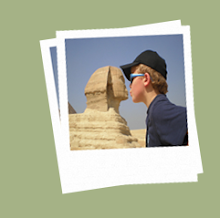
Cultural couples who can’t bear the idea of a clichéd Valentine’s Day should grab their backpacks and join us on this trip to Giza, which departs on the dreaded February 14th. What could be more romantic than roughing it in the desert and staring up at the crystal clear skies together at night? Just don’t kiss the camel, you’ll other half may not like it! Click to find out more here

Thanks for reading!
The Adventure Company

Monday, 22 December 2008

The Adventure Company: The brew of Peru- Pisco Sour day 2009!

When it comes to national treasures, Peruvians have a lot to feel proud of. But it’s not just the majestic monuments and natural wonders that fill the locals with patriotic pride.

You might have climbed Machu Picchu and ridden a bone rattling combi around Lima but only a seemly reverence for the country’s iconic cocktail, Pisco Sour, will win you culture points with the locals.


Photobucket

Pisco Sour

Five years ago, Peruvians pestered the government for a day dedicated to the drink they adore, believing it to be one of the best cocktails ever created.

Officials duly caved under the pressure and Pisco Sour Day is now held on the first Saturday of February each year, - and each year the festivities in towns and villages around Peru getter bigger, and go on for longer! This year therefore, Pisco Sour Day will be held on the 7th February 2009.

The past of Pisco

For those who aren’t familiar with the renowned cocktail, an understanding of their history may help..

Pisco is a grape brandy meaning “little bird” and actually reaches back to the 1500’s and stems from the Colonial rule. After the Spanish brought grapes with them to Peru’s general area, they were grown within the deserts, and the new climate and soil gave the grapes it’s own unique fragrance and taste. The King of Spain soon abolished wine in the 17th century, and so locals turned their hand into creating something other than wine that was just as delicious, by themselves.

Soon after the port in which the new export was shipped from was also called Pisco. By 1630, casks of Pisco were so valuable to people they were used as means of payment for houses and land. So popular, it was thought that at this time up to 20 million litres of grape brandy were being exported each year.

It has always been distilled from fresh new wine since then, and is distilled in a stop-and-go process, rather than a continual. Water is never added either so the percentage is as natural as it can be.

True Pisco
Like any other spirit, a true, well-matured Pisco can be distinguished by its fragrance and taste. In Peru, a test known as the “rope and rose” is used to determine quality. By shaking a bottle of quality Pisco in circles, a viscous formation will appear spinning in a whirlwind along the bottles vertical axis. The column of bubbles is so called a “rope” and the bubbles on top will appear to form the “rose”.

Another note, is that to truly appreciate Pisco and its cocktail namesake, there is a saying which dictates “the drinker never have one as it is not enough, but more than three is too much”.

The Pisco Sour
An American named Victor Morris who worked in the The Morris Barin Lima, invented the Pisco Sour cocktail in the 1920’s. Soon after, the grand hotels in Lima began serving the cocktail, and word spread internationally, and eventually onto most menus in cocktail bars you visit today.

Photobucket

The cocktail is made from the Peruvian brandy Pisco, mixed with lemon juice, egg whites and syrup and topped with cinnamon. It packs quite a punch and provides a refreshing change from the local beers usually on tap.

Pisco Sour Day 2009
Last year was full of riotous celebrations, as thousands of people gathered on the Pan-American Highway and were united in a mass “cheers!” as they clicked their cocktail glasses at midnight, in an attempt to set a world record.

Dance productions ran through the night all over the city, and at the official Pisco Bar in Lima, the celebration lasted two days and the bar created a specialised menu which offered 30 different types of Pisco-based drinks.

Photobucket

The 2009 knees-up will be no exception, with events scheduled to take place all over Lima, in the districts of Surco, Barranco and Miraflores. Activities include opening ceremonies, markets, a parade, a mass cocktail making contest

All the Pisco producers gather to display and offer tastings of their wares and festival highlights include artistic shows, bartender contests and a gastronomy display of traditional Peruvian foods and Limeñan desserts.

Look out for a bread that locals make just for the celebration, called “Pisco Pan’ which is made from Pisco distilled in Surco and raisin jelly which is then moulded into a sweet bread, and has a shelf-life of three days, the same duration as the parties many people hold.

How to make a Pisco Sour

Photobucket

If you don’t know how to make the infamous drink, have a practise at home before you go, and come across as a connoisseur when you arrive. Here is what you will need:
Ingredients
½ Cup of sugar
¼ Cup of water
½ Key lime juice
1 ½ cups of Pisco
3 Egg whites
2 cups of ice
Angostura Bitters (Flavouring)

Preparation
1. Make sugar syrup: put sugar and water in a pot and bring to the boil. Boil for one minute, remove from heat and let it cool.
2. Place sugar syrup, lemon juice, Pisco, egg whites and ice in a blender until very frothy
3. Serve in small thick tumblers, with a dash of bitters in the middle of the foam.
Tip: Egg whites give the traditional frothy top layer, but some people like to leave them out.
Serves 6-8.

A Pisco in Peru with The Adventure Company!

With the whole of Peru patriotically partying in February, why not visit Lima, or elsewhere in the country and really let you get caught up in the celebrations. It’s the perfect excuse to combine the party with a cultural tour of this beautiful area.

The Adventure Company offer 10 tours to Peru, each with a different itinerary and suitable for different kinds of travellers.

Special Offer: Book early now, and save 50 pounds- find out more information here

Watch the Peru Video from our Youtube channel to find out what it is like to be in Peru with The Adventure Company:


We are currently looking to include a blog with a past traveller to Peru. Have you been to the country with The Adventure Company? Have you partied in Peru? Do you have pictures of you sipping Pisco on location? Please get in touch- Leave us a comment, or get in touch via the email addresses on the right hand side of the page.

Thanks for reading!
The Adventure Company
“Adventure is our middle name”

The Adventure Company: Mountains in Morocco!

Our latest entry comes from Matt Westby who recently went to Morocco with us on our Winter Toubkal, and experienced a different side of the country- far from the deserts and vibrant cities, its clear Morocco and the Atlas Mountains are fast becoming a haven for adventure travelers. Here is what he had to say:

Photobucket

“Our guide Issam halts the group just yards away from a 1,000m drop into the abyss and invites us to rest.He appears not to notice it as he passes around a bag of nuts and then waves a Gore-Tex clad arm in an easterly direction.

"Look, you can see the summit. It's about an hour away. One-hundred-and-eighty metres more to climb."We all crane our necks towards the cloudless blue sky and, sure enough, there is the top of Jebel Toubkal, 4,167m high.Soon the sound of crampon spikes biting into the hard snow can be heard once again and we are on our way, keenly zig-zagging a path up the slopes.


Fifty minutes later, the incline runs out and all there is left to do is take the final steps onto the summit and complete our conquest of the highest mountain in North Africa.With not a breath of wind in the air, we stayed there for the best part of half-an-hour, taking photos, eating energy snacks, but, most of all, absorbing the awe of the High Atlas mountains.


Snow-capped summits penetrate the horizon in a 360-degree panorama and it feels a true privilege to stand there.
The climb up was no Alpine ascent but the relative ease of reaching the top of Toubkal is actually its greatest attribute, because it allows you to enjoy every step.

The greats like Hillary and Mallory might not hold it in high esteem, but for an aspiring adventure traveller, it is a real gem.

My trip to the High Atlas had begun three days earlier.


I had known very little about Morocco until this summer, assuming it to be nothing more than a country of sand dunes, snake charmers and people who love to haggle. A place for sun-seekers and culture junkies, I presumed. I'd go there one day, but not yet.

Then I heard about Toubkal and, with it, my eyes were opened to a different side of Morocco altogether.
The lure of a 4,000m peak was suddenly fusing with the appeal of sprawling souks and fine food, and before long I had booked myself onto an eight-day tour with The Adventure Company, which is based in the UK.

I flew out to Marrakech, an hour-and-a-half's drive north of the mountains, early on the Friday morning and spent the day exploring the city's famous Medina.

It's main square, Djemma el Fna, is the centre-piece, a place where Berbers and Arabs unite in an explosion of sight and sound which doesn't really come to life until after dark.By day it is filled with cobras, vipers and men cradling monkeys but when night falls, legions of food vendors, musicians and street performers take over.

Bolder tourists immerse themselves in the action, eating tagine and lamb kebab from the barbecue stalls before peering through the crowds at whatever stunt is being pulled next.All the while, Marrakech's famous souks (markets) conduct their bustling business just metres away.

The next day, the seven of us in the group met up with Issam and Mohamed, two good local guides contracted by The Adventure Company, and drove out to the small Atlas village of Imlil before hiking the short distance to our first night's base, a small conurbation based on a hillside called Aremd.

Our lodging was a traditional Berber guest house with only mattresses on the floor for beds and one fire for warmth.The evening meal was a local dish prepared by our dedicated cook and, as it would all week, went down superbly well.

We rose early the following morning to embark on a six-hour trek to a mountain hut 1,300m higher up the valley where we would base ourselves for the next three days.The ground in Aremd was totally free of snow but by the time we reached the French-run Neltner Refuge at 3,200m later that day, the white stuff was knee-deep.

After a lesson in how to walk in crampons and use an ice axe for stability in the afternoon, we made our ascent of Toubkal early on Monday.

Photobucket

Emerging from the refuge at 7am to be greeted by clear skies and still air, we set out on our 3hr 40 min climb to the summit.Having succeeded, we celebrated by spending most of the descent sliding down the slopes on our backsides so quickly that, having left the top at around 11.40am, we were back at the refuge by 1pm.

On the Tuesday we tackled Toubkal's sister peak, Ouanoukrim, marginally lower at 4,083m but slightly harder to climb given a short section just below the summit which requires scrambling over exposed rock.

Photobucket

Regrettably, we didn't make it that far. We climbed to a small plateau on the mountain called the 'saddle' roughly one hour from the top but were turned back by 40-50mph winds which dragged temperatures down to between -15 degC and -20 degC.

The cold was manageable, but Issam deemed the high wind would be too much of a risk on the exposed sections to come and told us to turn around.

We concluded our climbing on the Wednesday by ascending 700m up to another saddle with stunning views over the Atlas range, before dropping all the way back down to Aremd in heavy snow that afternoon.

Twenty-four hours later we were back in Marrakech, ruing the fact that our time in the mountains had been and gone so quickly.”

Matt went on the Winter Toubkal tour, clicking the link, you can find the latest pricing availability and a full itinerary.The Adventure Company also have 15 tours which go to Morroco

Kiddy explorers are also catered for as there are 3 tours targeted specifically at families with young kids are babies. The Magicial Morroco Infant holiday, Kids in Kasbahs, and theSaharan Sands ensure everyone is catered for!

Thanks for reading,
The Adventure Company
“Adventure is our middle name”

Tuesday, 16 December 2008

The Adventure Company: Staff Profile of The Month- Vicky Gallear

This month our UK Agency Sales Manager, Vicky Gallear tells us more about her role within The Adventure Company, her travelling experience and a few of her personal tips and highlights..


Photobucket
The Monastery, Petra, Jordan
I’m responsible for looking after all the travel agents in the UK who sell Adventure Company trips. I go out and train them on how our trips work, let them know about anything new we might have launched, fire them up about the variety we offer, answer their questions, fix any issues they might have, find new agents who might want to sell our trips… anything that the agents feel they need really.

What do you love most about your job?

Travel is my passion and I get to talk about it with people all day long. A big part of my role is getting travel agents excited about the types of trips we sell – the type of trips that I’ve travelled on and loved. I essentially get paid to talk to people about my holiday highlights (as well as the practicalities of how we operate as a company of course!)!

Photobucket
Early morning at Lake Atitlan, with the twin volcanoes of San Pedro & Toliman in the background, Atitlan Volcano is just out of shot

What is your most memorable travel experience?
I find on every trip I’ve ever done there are a couple of ‘wow’ moments. A time when it suddenly just clicks in your head ‘I can’t believe I’m actually HERE!’ and every one of them is a favourite moment. Everything from my first dive on the Great Barrier Reef, to standing in the deserted ruins of Yachilan in Mexico and hearing howler monkeys ‘roaring’ in the surrounding jungle, to Christmas Eve on Fraser Island, camping with 6 others and just looking up at the stars which looked like a tub of glitter had been knocked over the sky…,

Photobucket
An anteater in a tree in Tkial, I’d never even seen one in a zoo, let alone in the wild!
Photobucket
A great boat trip to some Mayan ruins on the Mexico/Guatemala border, watching monkeys playing in the trees iguanas and the like basking on the banks was incredible!

What is the funniest thing that has ever happened on a trip?
There are a lot of ‘you had to be there moments’ which are funnier in hindsight than they actually were at the time. I’m not sure it would be really fair to bore people with any of them – usually you needed to know the characters involved!

Where have you been?
Family holidays driving across the continent were the staple style when I was growing up. There were 6 of us, and loading everyone into my Dad’s estate car and hitching a trailer on the back with our tent in was the only way we knew to travel! The journey itself has always been always the best bit of travelling for me. We were lucky living in Hampshire, a ferry from Portsmouth and we were off – France, Spain, Italy, Austria…

Photobucket
Watching the locals walking through the night to construct the stunning ‘carpets’ for Semana Santa in Antigua, Guatemala

Straight from University I took my first trip on my own, a month long coast to coast across the USA from LA to New York which was fantastic and I met a great bunch of people, mainly Australians – which made my next destination a pretty obvious one! Following what I now recognise as the typical backpacker route I flew to Australia via South East Asia and spent a year working a bit and wandering a lot!

Photobucket
Sunrise from my sleeping bag at Wadi Rum, Jordan

Since joining The Adventure Company I have been lucky enough to travel to amazing spots including Egypt, Jordan, Mexico, Guatemala, Honduras and Crete!

Where are you going next?
There are so many places that I haven’t been yet and every time I think about it my wish list grows. I’ve never done a safari so I’d love to escape to Tanzania, Kenya or Namibia during 2009. Two other countries featuring in my plans for the (hopefully) not too distant future are India and Nepal – ‘must see’ destinations that I’ve yet to visit.

Best travel tip:
Look out of the window. People who sleep through the entire journey, waking at their destinations miss out on so much, particularly on road trips and overland adventures. It’s when you’re driving through the smaller places that you actually get see people living their lives and you get a real feel for the country you’re visiting – don’t miss it!

Photobucket
Looking over the Sinai Peninsula from halfway down Mt. Sinai, Egypt

What inspires you to travel?
Without a shadow of a doubt, I have the travel bug, and it’s nothing more or less than that. I’ve always had it and I love getting away from the day to day. I’m just as happy travelling within the UK as I am on an overland adventure through Central America. I can’t narrow it down to a neat cliché like ‘experiencing other cultures’ or ‘seeking adventure’, it’s a combination of so many things. I just know that when I’m not travelling I want to be because I haven’t seen nearly enough places yet, and when I am on the road I want to keep going. I can’t explain it, it’s just there. That’s why I love my job; it lets me spend all my time surrounded by travel in one form or another – and it gives me lots of ideas for trips to do next!