Showing posts with label safari. Show all posts

Friday, 5 June 2009

The Adventure Company: Into the depths of Africa!

This week, James Ingham shares his travel diary with us following the time he spent on our Delta to Victoria Falls trip to Botswana

"I was lucky enough to have just done part of the Delta to Victoria trip (trip code BS); spending two days in the Delta and two days in Moremi National Park and there are two over riding & life changing aspects I took out from the experience, which I’d like to share.

One, coming from the UK, being in environment dominated by the animal kingdom truly turned my world upside down. We live in such a populated island, the only wildlife we see on a regular basis are birds – well the last few days certainly turned that on it’s head…everything had a place and purpose, the whole environment was the result of thousands of years evolution; perfectly symbiotic. The Okavango Delta is large enough for natural migration patterns which not many other places can provide nowadays. Secondly, no mobile reception, TV, laptops, news, or worries of work – this is one of the most tranquil and serene holidays I have ever had it really showed me how little we need to live happily.

So, here are the highlights

Day One
We flew into Maun, described by one of the travellers as the frontier town for the Delta, and it certainly had that feel to it; it’s where most people start We explored the High Street and then enjoyed a 45minute evening flight over the Delta, spotting herds of elephants and zebras, but crucially, we got a sense of the scale of the wilderness; it’s a staggering 16000sqkm!

Photobucket

Photobucket

Days Two & Three
After a short drive in the Land Cruiser we entered the Delta’s designated wildlife area, once we passed the massive buffalo fence which splits the wilderness from the grazing land we were instantly hit by wildlife – a great introduction. Within two minutes there were baboons crossing the road, followed 30 seconds later by hippos relaxing in a waterhole. The 45 minute off-road drive continued to the polling station to meet our guides was and in that time we saw ostriches, giraffes, Tsebes and many birds.

Photobucket

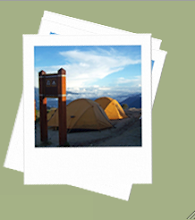
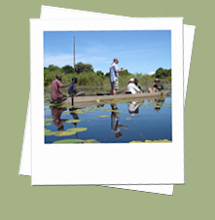
Then it was into the Mokorros for a unique bush experience; being punted through the reeds, enjoying the sun and witty rapport. We arrived at our campsite, which some pollers had set up before out arrival. The wild campsites deserve a mention, the pollers put up and took done most parts, but when we were in Moremi we helped the guides, putting up tents and washing up, leaving them to manage the fire and the cooking, but help was always appreciated and every was willing to chip in. The outdoor showers and toilets were are really unique experience – particularly the shower in Moremi - I found myself lathering up looking out over a herd of elephants and a pod of hippos, definitely one of my best showers…

Photobucket

Here in the Delta, the mokorro pollers took us on walking safaris in the early morning and evening, which were very memorable for me – seeing these guides use their tracking knowledge to uncover herds of elephants, zebras, impala and giraffes – the whole experience was so natural it was breathtaking – nothing but bush land between us and the animals just 50 metres away and I, or they, never felt threatened. The most memorable experience here was taking a mokorro trip to see a hippo pool in the early evening – it was fascinating watching their interaction between themselves and us, all against a beautiful tropical sunset.

Photobucket

Days Four & Five
From here we got back in the Land Cruiser and drove up to Moremi with our local Botswanan guide, Pass. Moremi is known for being rich in wildlife – typifying Botswana’s policy of a low volume of visitors but at a higher price and this certainly added to the experience.

Photobucket

Photobucket

It was as game drive should be seen, on most the morning or evening drives we would see just 2- 4 other vehicles in 2-3 hours; a far cry from my initial perception of one leopard lying in the sun and eight trucks around it. For this Botswana is special, you really feel immersed in the wildness. No more so than at night, when you are around the campfire chatting and you hear hippos grunting the background, hyenas calling out and elephants trumpeting. In the reserve you’re not allowed to get out of the truck so our two guides are busy pointing out the game, there were so many amazing birds and animals, but the real highlight was watching a stampede of elephants come across the bush towards our truck. I’ll never forget this, lucky because my images of it were not so great...

This is an abridged summary of my few days in Botswana. I had a great time and I’m happy to talk to anyone about it. It far surpassed my initial expectations and I have come back with better feel for what life is all about. I learnt so much about the animal kingdom, got a real sense of purpose and I can not thank my guides enough- just great, super, amazing, awesome… "

James went on our Delta to Victoria Falls trip, but we also offer five other tours to Botswana. Visit our website to find out more.

Thanks for reading,
The Adventure Company

Thursday, 19 March 2009

The Adventure Company: Born Free Foundation's 25th anniversary!

If like us, you love the classic film Born Free, and can remember that tear-jerking moment when the lioness Elsa recognises her former owners, you’ll be pleased to know that it's precisely 43 years since its original release.

And more importantly, it's 25 years since Virginia McKenna and her husband Bill Travers started the Born Free Foundation.


So, in order to celebrate this fantastic milestone, we think it's only right to pick out some of the key highlights of the foundation's legacy.

The Film:

Photobucket

Actors Bill Travers and Virginia McKenna travelled to Kenya to star in “Born Free”, which followed the real life story of George and Joy Adamson and their fight to return Elsa, a lioness back into the wild.

Photobucket

Released in 1966, this seemingly innocent film changed Bill and Virginia’s lives forever. Their close contact with the primates on location made them realise that wild animals belong in the wild, and have the right to be protected.

Watch the original film trailer:


Pole Pole
Soon after the release of the film, which critics raved about and audiences loved, Bill set to work on producing a stack of influential wildlife documentaries and films. One of these called “An Elephant called Slowly” was set in Kenya, and starred the couple. It also featured Pole, a little elephant calf.

Photobucket

Originally, Pole was a gift from the Kenyan government to London Zoo, however Pole was taken from her family in the wild, aged two. After completing the film, Bill and Virginia tried, and failed to stop Pole being returned to captivity. Over 14 years later, in 1982, the couple went to visit her at the zoo, and were extremely upset to find that the elephant seemed depressed, and had no companions as she plodded around her cage.

Photobucket

In a moment of desperation, they called out her original name, and Pole, turned in recognition at the couple, and began bounding over to them to touch their hands. After this, the couple tried to renew the campaign, but tragically Pole died just a year later. Considering elephants can live to at least 60, the couple became convinced that her life was made shorter due to her captivity.

Zoo Check

Photobucket

Determined that Pole would not have died in vain, Bill and Virginia, along with their son, Will Travers, set up Zoo Check in 1984. This charity independently monitored and rallied for the release of animals in captivity.

Photobucket

Zoo Check evolved into the Born Free Foundation, and it is because of Zoo Check there are now no more elephants at London Zoo.

Born Free Foundation
Photobucket

First launched in 1984 (hence the anniversary) and fully recognised in its own right in 1991, the Born Free Foundation undertakes animal welfare, conservation and public awareness campaigns to prevent animal abuse, and to ultimately keep wild animals in their natural habitats.

Photobucket

Over the years, the foundation has launched many influential campaigns and have also fought against ivory trade, “sport” hunting, killing animals for bushmeat and challenging the exploitation and living conditions of animals in zoos and circuses.

Photobucket

Now 25 years on, the Born Free Foundation still cares about saving individual animals, and firmly believes every animal counts. They are now have emergency teams on-hand at all times, which have rescued animals from small cages, and re-housed them in vast sanctuaries all over the world. Whilst there, Born Free also provides these animals with food and care.

GMTV
GMTV has been working with Born Free since 1995 on several of its missions. From saving lion cubs Anthea and Rafi who were once imprisoned on the roof of a bar in Tenerife to rescuing lions in captivity in Bucharest, the programme has continued to give its support.

See these videos for various reports from over the years (tip: you may need a tissue!)


Big Cat Sanctuaries
The Foundation now also has two big cat sanctuaries in South Africa at the Shamwari Game reserve.

Photobucket

Lions and leopards from all over the world have been rescued and placed here. The sanctuaries are also open to the public as education centres for school children, receiving at least 500 visitors per month.

The Adventure Company and Born Free
One of the Born Free Foundation’s most important current causes is sustaining responsible tourism. Therefore, Born Free and The Adventure Company work together to positively influence aspects of travel that may affect local animals and villagers.

Photobucket

The Adventure Company currently donates $5 for every customer who books a trip to Uganda. This money supports the Ngamba Island Chimpanzee project, and Born Free’s Great Apes Survival project.

Photobucket

By including the projects in many of our Ugandan itineraries, they support local tourism, and encourage travellers to help and understand the importance of saving gorillas, chimpanzees and orang-utans worldwide.

They also support Born Free Travellers’ Animal Alert, which encourages holidaymakers to report any signs of animals suffering when they are abroad.

The Adventure Company offers several safari, treks and trails in Uganda, and in many other places throughout East and South Africa. Find out more on the Adventure Company website.

Monday, 9 March 2009

The Adventure Company: Getting Close in Tanzania!

This blog entry comes from Ellen Sziede our Product Executive, who recently made her way back to Africa and took part in our Serengeti Explorer Trip. Find out how she got on, and what her highlights were:

"Last May my boyfriend and I travelled on the Serengeti Explorer trip. For me, it was a much-anticipated return to Africa, while for Pete it was a rather spontaneous adventure – having not been on a safari or a group trip before, he was up for any new experience. The first highlight came before we’d even landed. It was a clear day, and the flight was not overly full, so when we passed Mount Kilimanjaro, we could actually get to the windows with the best views.

Photobucket

On arrival in Arusha, the group was transferred to the lodge, to freshen up and relax for the afternoon, before embarking on safari the next day. Karama Lodge is not an anonymous city centre hotel but consists of stilted wooden cabins, scattered around a lush green garden, with scenic views of Mount Meru. It was a peaceful place to relax for a bit and get to know the other travellers in the group over dinner.

Photobucket

The next morning we met our safari team: Guides Jacob and John, and the chef Innocence. We teamed up in two safari vehicles and made our way out of Arusha, with stops to change money and buy drinks and snacks for the duration of the trip – opportunities to buy supplies are very limited while on safari in the national parks.

We made it to Mto wa Mbu in time for lunch and set up camp at a lovely, green campsite, complete with swimming pool. In the afternoon, we set off for the first game drive, in Lake Manyara National Park, about 25 minutes drive down the road. We had barely made it through the park gates, when we had our first sighting: a rather vain-looking baboon was posing at the side of the road, as if waiting to have his portrait taken. We obliged.

Photobucket

Much of Lake Manyara National Park is covered by dense bush – which makes it a perfect playground for monkeys and a great hiding place for antelope and elephants.

Photobucket

We stopped at a waterhole just as the afternoon sun was dipping, giving everything a lovely soft glow. It was the perfect setting to stop for a good while and watch hippos wallow in the water and birds take flight.

Photobucket

We had a great introduction to game viewing this afternoon, seeing elephants, impala, baboons, hippos, giraffe, and even some buffalo and lions from a distance. As one of the less famous national parks, Lake Manyara was a wonderful surprise with its varying landscapes of lush thick bush and open, grassy spaces.

The next day we traversed some amazing landscapes, working our way up the side Ngorongoro Crater – the proper visit into the crater would only be in a few days time, but we got a sneak preview as we stopped above the crater – and visiting Olduvai Gorge. We stopped here for lunch and listened to an interesting – and entertaining – talk about the archaeological pursuits of Dr Leakey, before browsing through the attached museum.

In the afternoon we reached the famous Serengeti. It certainly did not wait long to wow us. We were en route to our campsite when we saw two beautiful lionesses crouched in the long grass next to the road. We stopped and watched, cameras at the ready. One lioness raised her head and took in the scent of us.

Photobucket

To our delight, instead of disappearing in the long grass, she prowled closer and closer…

Photobucket

… until she crossed the road right between our two vehicles!

Photobucket

We reached our campsite mid afternoon and set up camp for the next two nights. Facilities were basic, with only two cold water taps available, but our safari team went to great effort to provide the necessary little comforts by setting up basins with warm water next to each tent in the morning, so we could freshen up a bit.

Photobucket

And while warm showers are lovely, we were more than compensated for roughing it a bit by enjoying the sense of adventure that comes with camping in the middle of one of the world’s most exciting places for wildlife watching – hearing the call of a hyena while you lie in bed at night is every bit as amazing as seeing the animals up close during the day!

The next two days were filled with game drives and many wildlife sightings. Amongst others we saw buffalos, elephants, giraffe, warthogs, impala, Thompson’s gazelle, Grant’s gazelle, waterbuck, vultures, zebra, wildebeest – and even an elusive cheetah, ducking down in the long grass, but visible with binoculars.

One of my highlights was a regular stampede of zebras and wildebeest at a waterhole. The animals would run towards the water, driven by the urge to drink. In the water, however, lurked a crocodile, and one animal would inevitably give out a warning cry after gulping a few mouthfuls of water.

The entire herd would then turn and gallop away from the threat – only to rush back to it a few moments later – too thirsty to resist. Great clouds of dust were churned up, increasing the eerie atmosphere created by the zebra cries and the seeming chaos of hundreds of animals racing back and forth, torn between thirst and safety.

Photobucket

Another spectacular moment was as we returned to camp from our cheetah sighting. We had stayed a bit longer than we were supposed to – the park management imposes strict rules that groups have to be back in camp by sunset, for safety reasons – but seeing a cheetah is such a rare treat that of course we were not going to rush it! With the light fast fading, we were treated to a truly African sunset, with deep red skies and picture perfect Acacia tree silhouettes.

Photobucket

With the Serengti having lived up to expectations, we travelled onward to the next big name: Ngorongoro crater. En route we stopped for an optional visit at a Masai village. After making a contribution of 50 USD per vehicle, the Masai invited us into their village, where they performed a traditional dance, which the group got to join.

Afterwards the young men who had been voted by the community to act as guides took us on a walk through the village, including the opportunity to crawl into one of their tiny traditional dwellings.

Photobucket

The first surprise of the Ngorongoro crater was just how much of a temperature difference one encounters as you reach its heights! The campsite is perched right at the crater rim, and we had amazing views on arrival, but the price is a somewhat chilly night. You definitely need to come prepared with a warm fleece!

We rose early in the morning to make the most of the time in the crater. Being somewhat unlucky with the weather, it was raining for the first hour or so in the crater, which is a rare occurrence. Once the skies cleared up, had a great time criss-crossing the crater floor, spotting for the famous rhinos. We did get a sighting, although from quite a distance, requiring binoculars. The most exciting moment of the day was certainly when we spotted three lionesses, and following them, they led us straight to their majestic male!

Photobucket

After an exciting morning in the crater, we made our way up its steep slopes again and journeyed to Karatu – a lively little town at the foot of the crater. The campsite here spoiled us with good hot showers, and after setting up our tents to dry out in the warm afternoon sun, some of us went for the 20 minute walk into the town.

Karatu is wonderfully low key – there were two or three souvenir stalls but overall it is just a small market town going about its business, which is exactly what I liked about it. It was great fun taking in the street scenes of rattling buses travelling through and colourful ‘kikois’ (wrap skirts, essentially made of a single length of cloth) being sold. We met a group of curious and charmingly cheeky school children on our way back to the campsite – enjoying a game of Frisbee and some picture posing.

Photobucket

Our final national park stop was Tarangire – famous for its elephants and baobab trees. It certainly delivered on both! Our tent was pitched right underneath a massive baobab:

Photobucket

And on our final game drive we encountered plenty of elephants – getting very close to a beautiful family with their young. A fitting finale for our great wildlife adventure!

Photobucket

The next morning we packed up our tents for the last time and headed back to Arusha. We might not have ticked all the “Big Five” (not having sighted a leopard) but they are not really what a safari should be about anyway. Instead, the trip was full of unexpected and unforgettable moments, and Tanzania really showcased Africa’s beauty.

I got my “Africa fix”, Pete got an introduction to a safari adventure, and we only have to settle the question of “Where to next?”!

Ellen and Pete went on our Serengeti Explorer Trip, but The Adventure Company also offer many more trips to Tanzania . Find our more information on our website
Thanks for reading,
The Adventure Company